Overview

Mera Peak Climbing, standing at 6,476 meters, is a thrilling adventure that beckons mountaineers to the highest trekking peak in the Khumbu region of Nepal. Positioned on the edge of the famous Khumbu Valley, Mera Peak offers climbers an exhilarating opportunity to experience the grandeur of the Himalayas, including views of the iconic Mount Everest. Known for its challenging terrain, Mera Peak attracts those with a passion for adventure and a desire to conquer one of the most demanding peaks in the region.

The climb to Mera Peak is not only about reaching the summit; it’s about soaking in the breathtaking beauty of the Himalayas. The journey to the peak rewards trekkers with stunning vistas of neighboring giants such as Kanchenjunga, Cho-Oyu, and Lhotse. The trek through the Khumbu Valley is filled with picturesque landscapes, snow-capped mountains, and the serene wilderness that makes the experience unforgettable. With routes ranging from Lukla to Jiri, climbers have options that cater to both standard and more scenic paths, enhancing the journey’s allure.

Conquering Mera Peak is a true test of endurance and determination, requiring physical fitness and mental preparation. The climb involves navigating steep snow slopes and challenging terrains, pushing adventurers to their limits. As climbers reach the high camp and finally stand on the summit, they are rewarded with awe-inspiring panoramic views of the Himalayas, making the journey truly worthwhile. Mera Peak Climbing is more than just an ascent; it’s a remarkable achievement that combines the thrill of adventure with the beauty of the world’s tallest mountains, leaving climbers with memories to cherish for a lifetime.


Quick Facts

Difficulty Difficult
Max Altitude 6,476 M
Group Size 6-20
Duration 19 Days
Trip Code Premium Package
Accommodation Hotel
Best Time SPRING & AUTUMN

Our Itinerary

Day 1 : Arrival at Kathmandu International Airport. : Upon your arrival at the Tribhuvan International Airport in Kathmandu, a friendly representative from our team will be there to greet you and assist with your transfer to the hotel. You will have the chance to meet with your experienced guide today and take advantage of the opportunity to address any remaining concerns or inquiries you may have regarding your upcoming trek to Everest Base Camp.
Day 2 : Half day Sightseen of Kathmandu city, overnight Hotel : Embark on a tour of Kathmandu’s major sporting attractions, including the Boudhanath Stupa, Pashupatinath Temple, Monkey Temple, and the ancient city of Bhaktapur.
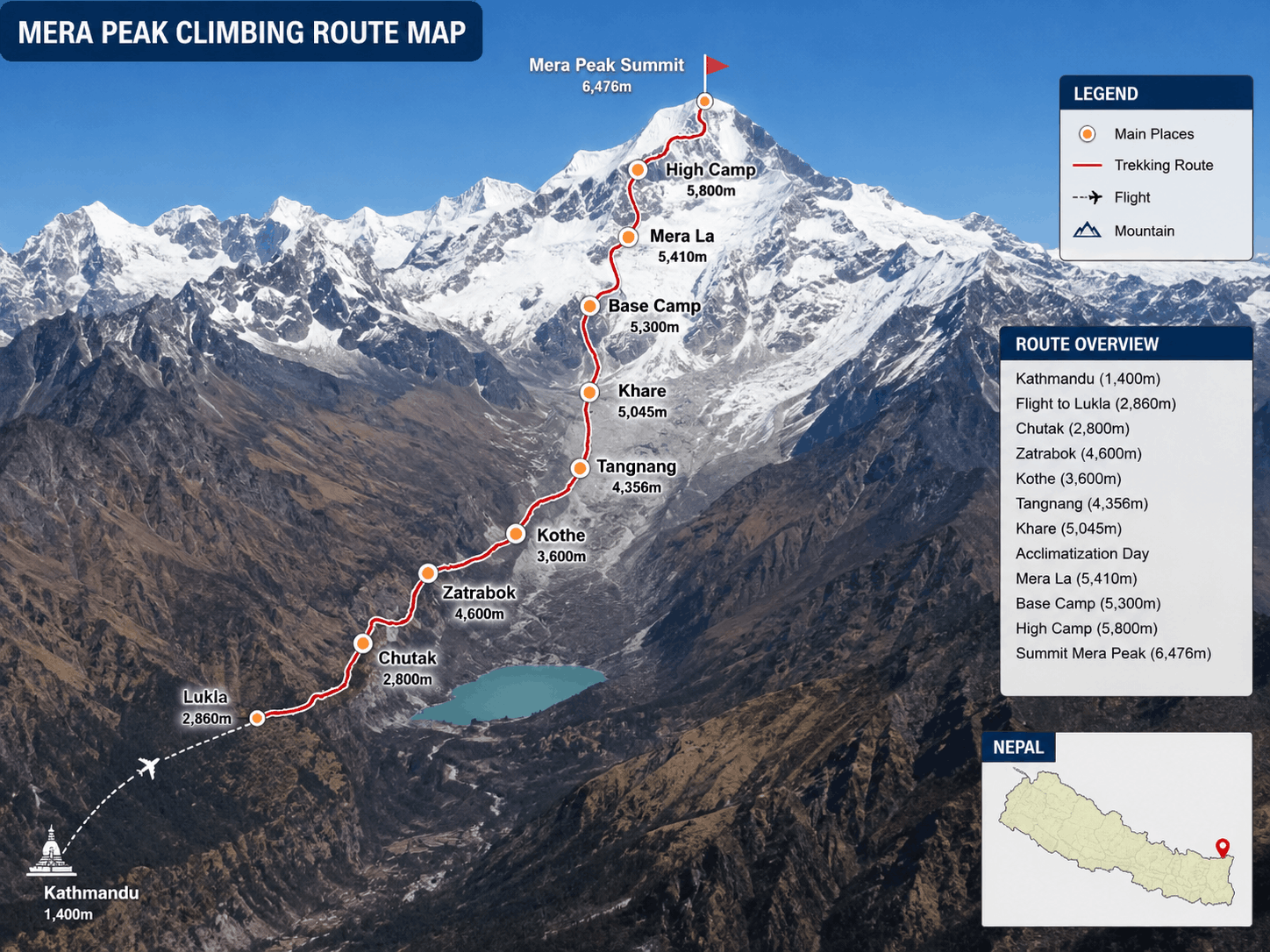
Day 3 : Drive to Airport & Flight to Lukla & Trek to Chutak : Your trekking adventure officially begins after flying into Lukla Airport from Manthali. From Lukla, a three-hour hike leads to your first destination, the village of Chutok (2800 m). Upon arrival, you will settle in for an overnight stay at a local guesthouse. The following morning, the journey continues onward through serene landscapes, opening up to panoramic views of the surrounding Himalayan peaks.
Day 4 : Chutak to Zatrabok via Zatrawala Pass : An early morning departure from Chutok takes you on a gradual ascent toward the Zatrawala Pass ($4704\text{ m}$). Crossing the pass rewards you with expansive views of Numbur Himal, Kongde Ri, and the Karyolang peaks. After a total of about 6 hours of trekking, the trail descends into the high valley of Zatrabok ($4600\text{ m}$), where you will spend the night at a guesthouse surrounded by dramatic mountain scenery.
Day 5 : Zatrabok to Kothe : On the fifth day of the trek, descend from Zatrabok down to Kothe ($3600\text{ m}$), a journey of approximately 5 hours. The trail leads into a picturesque landscape lush with juniper trees and rhododendron forests, offering a scenic change of pace. Upon reaching Kothe, you will check into a local guesthouse for an overnight stay to rest and rejuvenate for the trail ahead.
Day 6 : Kothe to Tangnang : From Kothe, resume the trek with a gradual elevation gain toward Tangnang ($4356\text{ m}$). As you walk through the Hinku Valley, the trail passes the scenic glacial lake of Sabal Tsho and offers striking views of the technical peak Kusum Kanguru. The hike takes a few hours, leaving plenty of time to relax and acclimatize at a local guesthouse before continuing the journey the next day.
Day 7 : Acclimatization Day. : Following the 5-hour trek to Tangnang, you will take a dedicated acclimatization day to adjust to the high altitude. This is the first official rest day of your Mera Peak journey. You can spend the day leisurely exploring the valley, taking in the local culture, and admiring the surrounding peaks and glaciers. Taking it easy today helps your body adapt, preparing you for the higher elevations ahead. You will spend another night at the guesthouse to rest and rejuvenate.
Day 8 : Tangnang to Khare : An early morning start from Tangnang leads toward Khara ($5045\text{ m}$), a journey of approximately 4 hours characterized by a steady, gradual ascent. As you climb, the trail follows the lateral moraine of the glacier, opening up direct and stunning views of Mera Peak. While the increasing altitude makes the trek challenging, the captivating high-mountain scenery rewards the effort. Upon arriving in Khara, you will check into a local guesthouse to rest and recharge for the upcoming higher stages of the climb.
Day 9 : Acclimatization Day. : The second acclimatization day at Khara focuses on active adaptation to the $5000\text{ m}$ environment in preparation for the ascent to Mera La. You will spend the day exploring the rugged terrain, reviewing gear, and helping your body adjust to the high altitude. This preparation is critical for a safe, successful summit before spending one final night at the guesthouse to rest and recharge.
Day 10 : Khare to Mera Base Camp via Mera La : An early morning departure from Khara leads to Mera La ($5,415\text{ m}$), a challenging but engaging trek that ascends along a snowy glacier and navigates steep, tricky terrain. Under the steady guidance of experienced climbing guides, you will safely make your way up to the pass. After a strenuous day on the ice, you will set up camp in a tented area to rest and rejuvenate for the final stages of the Mera Peak climb.
Day 11 : Base Camp to High Camp : Following a rest and acclimatization day at Mera La, a challenging 4–5 hour trek brings you up to High Camp. This exciting leg offers panoramic views of iconic peaks soaring above 7,000 meters, including Everest, Nuptse, Lhotse, and Ama Dablam. Navigating through this dramatic, high-altitude landscape brings you to your tented camp for the night, where you will rest in the quiet surroundings of the high mountains before the summit push.
Day 12 : High Camp to Summit and back to Khare : A pre-dawn push brings you to the Mera Peak summit for sweeping views of Makalu, Lhotse, and Cho Oyu. Afterward, you will begin a demanding descent back to Khara (4,900 m). The entire round-trip takes approximately 10 hours, wrapping up an intense but unforgettable summit day.
Day 13 : Spare Day- Contingency. : A crucial contingency day is built into the schedule to account for unpredictable weather or unforeseen delays, ensuring a flexible and successful climb. If the reserve day isn't needed for the summit, it can be used to explore the surrounding landscape before spending the night in camp.
Day 14 : Khare to Kothe : On Day 14, you will leave Tangnag behind and descend to Kothe (3,600 m). This brief, easy descent takes only about an hour and offers a final look at the beautiful landscape. You will spend the night at a cozy guesthouse, marking the end of the challenging trekking stages and providing a perfect opportunity to relax, reflect on the incredible journey, and celebrate your successful climb.
Day 15 : Kothe to Zatrabok : Leaving Kothe, the trail winds back up toward Zatrabok through a diverse landscape of alpine vegetation and vast rhododendron forests. Crossing high passes and rolling green hills, this leg offers an excellent opportunity to connect with local Sherpa and Nepali culture. You will spend the night at a guesthouse, taking in the scenic valley views.
Day 16 : Zatrabok to Chutenga : Departing Zatrabok, a steady climb brings you up to the Zatrwa La Pass before the trail descends toward Chutenga, a journey taking approximately 6 hours. Along the way, you will enjoy sweeping views of rolling hills and lush forests. Upon arrival, you will check into a local guesthouse to rest and immerse yourself in the final scenic stretch of the region before the trek wraps up.
Day 17 : Chutenga to Lukla : The final day of the trek follows the trail from Chutenga back to Lukla, descending through beautiful forests of rhododendron, fir, juniper, and oak. Along the way, you will enjoy spectacular views of Kongde Ri, Numbur Himal, and Karyolung peaks. Though it is a long day of walking, the stunning scenery carries you to your final guesthouse in Lukla, where you can rest and reflect on the incredible journey just completed.
Day 18 : Lukla to Manthali-Kathmandu : Due to peak-season flight updates, all fixed-wing flights between Kathmandu and Lukla are diverted to Manthali Airport in Ramechhap to reduce air traffic congestion. For your return, you will take a short, scenic 20-minute flight from Lukla to Manthali Airport, followed by a 4 to 5-hour drive back to Kathmandu along the scenic BP Highway.
Day 19 : Departure for sweet home country. : After breakfast, our representative will assist with your transfer to Tribhuvan International Airport for your departure flight. Standard hotel check-out is at 11:00 AM. If you have a late flight or wish to extend your stay in Nepal to explore further, please let us know so we can arrange the necessary accommodations. Safe travels!

Include

  • Included Pickups and drops from your hotels and the airport
  • Included Sightseeing tour of the Kathmandu Valley, which includes visits to the Monkey Temple, Pashupati Temple, Boudhanath, and Durbar Square
  • Included Accommodation in Kathmandu, teahouses, and tents during the trek and climb
  • Included All ground transportation as per the itinerary by private vehicles
  • Included All entrance and permit fees for monuments and museums visits
  • Included Services of English-speaking, trained, and experienced staff including trekking guide(leader), climbing sherpa, and porters including their salary, insurance, equipment, flight, and food
  • Included All domestic flights (Kathmandu to Lukla to Kathmandu)
  • Included Welcome dinner
  • Included Breakfast in Kathmandu and all meals in the mountains
  • Included Porter services for trekking (2 Trekkers: 1 porter)
  • Included All necessary paperwork, including trekking permits and Island Peak climbing permit
  • Included High-quality tents and kitchen gear for camping
  • Included Travel and rescue arrangements
  • Included Group mountaineering (climbing) equipment
  • Included Medical kit
  • Included Company services and all required government taxes/royalties.
  • Included We have everything covered, so you can relax and enjoy your adventure in Nepal.

Exclude

  • Excluded Nepalese visa fee
  • Excluded International airfare to and from Kathmandu
  • Excluded Extra nights’ accommodation in Kathmandu due to early arrival, late departure, or early return from the mountain (due to any reason) beyond the scheduled itinerary
  • Excluded Altitude sickness medication and oxygen supply
  • Excluded Lunch and dinner in Kathmandu if returning early
  • Excluded Travel and rescue insurance
  • Excluded Personal expenses such as bar bills and laundry service
  • Excluded Personal climbing equipment
  • Excluded Tips and donations for staff.
  • Excluded Please note that these expenses are not covered in the package, and you will need to arrange for them separately.

Trek Route Map
Mera Peak Climbing

19 Days
$7000 $8000

Your Details

    Need Help?

    Not sure about something? We're happy to help.

    Small Packages Himalaya

    You Also Like Similar Packages

    No packages found

    How difficult is Mera Peak Climbing? +
    Mera Peak is a challenging climb that requires good fitness, proper acclimatization, and basic mountaineering skills.
    What is the highest altitude of Mera Peak? +
    The summit of Mera Peak stands at 6,476 meters (21,247 ft) above sea level.
    Do I need previous climbing experience? +
    Previous trekking experience is highly recommended, while basic climbing experience is helpful but not always mandatory with proper guidance.
    What is the best time to climb Mera Peak? +
    The best seasons are Spring (March–May) and Autumn (September–November) for stable weather and clear mountain views.
    Which mountains can be seen from the summit? +
    From the summit, you can enjoy spectacular views of Everest, Lhotse, Makalu, Cho Oyu, and Kanchenjunga on clear days.
    FAQ Himalaya

    Frequently Asked Question

    Partnerships & Group Adventures

    Rotary Logo

    Or reach out anytime at:

    info@sherpaleaderstreks.com